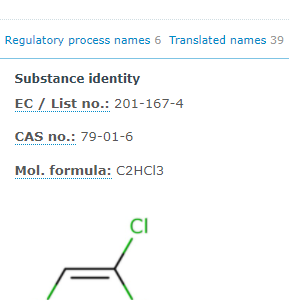
This report takes a detailed look at the impacts of REACH authorisation on trichloroethylene (TCE) from its inclusion on the Candidate List in 2010 until January 2022.
The need to obtain authorisation significantly reduced the use of TCE. The annual use of TCE in the EU has dropped more than 95 % in the past 12 years.
Biocidal products placed on the German market before 26 August 2021, must be confirmed/notified by 31 March 2022 if the product is to remain on the market.
BAuA (the Federal Institute for Occupational Safety and Health ) in Germany has published a new requirements for national product authorisation of biocidal products: “Neues Meldeverfahren für Biozidprodukte“.
In addition to the information that had to be submitted as part of the previous notification, all new notifications must include the following:
Concentration of the active substance in the biocidal product;
Information on compliance with article 95 of the EU Biocidal Products Regulation (BPR);
Evidence of the attributed effectiveness of the biocidal product.
Ignoring the requirement for the notification will mean that the product should not be placed on the German market.
Ekotox Centers provides consultancy services and support for the customers placing biocidal products on merkets in EU member states.
ECHA has updated its recommendations to help companies improve their registration dossiers and has added more advice on using read-across and weight of evidence.
ECHA has further developed its recommendations to registrants on how they can improve their registrations, based on observations during compliance checks and following recent changes in information requirements under REACH.
The improvements particularly concern rules for adaptations such as how to apply read-across and weight of evidence, or combine the two approaches. These approaches should be used to fulfil legal requirements without further testing on animals if they can be justified in a robust manner.
The recommendations also cover suggestions on how to address a read-across between substances of unknown or variable composition, complex reaction products or of biological materials (UVCBs) as well as additional advice on dose setting for toxicity testing.
Registrants should check the amended REACH annexes as well as the latest recommendations and make their dossiers comply with the information requirements, where needed.
The European Chemicals Agency brings forward a proposal for an EU-wide restriction on all per- and polyfluoroalkyl substances (PFASs) in firefighting foams.
If adopted, the restriction could reduce emissions of PFASs into the environment by more than 13 000 tonnes over 30 years. The estimated costs to society would be around EUR 7 billion over the same period. These costs include, among others, the price of modifying equipment for using PFAS-free foams, the cleaning of equipment to remove PFAS foam residues and the price difference between PFASs and alternative foams.
The proposal is based on information that was available at the time it was prepared and can be updated if new information comes to light. A six-month consultation is planned to start on 23 March 2022 that is open for anyone to give evidence-based comments on the proposal. ECHA will also organise an online info session on 5 April to explain the restriction process and help those interested to take part in the consultation.
Additionally, five European countries (The Netherlands, Germany, Denmark, Sweden and Norway) are working on a restriction proposal that will cover all PFASs in other uses. They are planning to submit their proposal to ECHA in January 2023. The risk assessment introduced in the proposal to restrict PFASs in firefighting foams is relevant for all PFASs. This means that it will also pave the way to assessing risks in the wider PFAS restriction.
Next steps
ECHA’s scientific Committees for Risk Assessment and Socio-Economic Analysis will now start assessing the proposed restriction options. In their assessment, they will consider the scientific evidence received during the consultations. The combined opinion of the two committees is expected in 2023. Together with the 27 EU Member States, the European Commission will take the decision on the restriction and its conditions – based on the proposal and the committees’ opinion.
Ekotox Centers
Ekotox Hungary Kft. (Hungary)
Ekotoxikologické centrum CZ s.r.o. (Czechia)
Centrum Ekotoksykologiczne Sp. z o.o. (Poland)
Ekotoxikologické centrum Bratislava s.r.o. (Slovakia)
February 2022; Ekotox Centers selection from EU chemicals and related legislation:
Eight other substances proposed for authorization!
An Act making it mandatory to report products in the SCIP database
New obligations for manufacturers of reserved products applicable from 1 January 2022
Four hazardous chemicals added to the Candidate Lis
Public consultation on REACH revision launched
Ongoing guidance consultation
Updated SCIP candidate list package available
Last call for REACH number for NONS notifications
News on approvement of plant protection products
—————————————————————————————————————————————–
Eight other substances proposed for authorization!
ECHA invites comments on its proposal to include eight substances of very high concern in the REACH Authorisation List. Comments can be given by 2 May 2022.
ECHA considers recommending eight new substances below for the European Commission to include in the Authorisation List (Annex XIV to REACH).
The information will be passed on directly to the Commission and will not be considered by ECHA.
2-methyl-1-(4-methylthiophenyl)-2-morpholinopropan-1-one (CAS: 71868-10-5 EC: 400-600-6), toxic for reproduction
2-benzyl-2-dimethylamino-4′-morpholinobutyrophenone (CAS: 119313-12-1 EC: 404-360-3), toxic for reproduction
Diisohexyl phthalate (CAS: 71850-09-4 EC: 276-090-2), toxic for reproduction
Orthoboric acid, sodium salt (CAS: 13840-56-7 EC: 237-560-2), toxic for reproduction
If a substance is included in the Authorisation List, it can only be placed on the market or used after a given date if an authorisation is granted for a specific use. Companies that are using, manufacturing or importing these substances can apply for authorisation.
An Act making it mandatory to report products in the SCIP database
On 1 November 2021, the Act of 30 September 2021 amending the Waste Act and certain other Acts entered into force.
The modification of the provision in question is related to ensuring the full transposition of Article 9(1)(i) of Directive 2008/98/EC of the European Parliament and of the Council of 19 November 2008 on waste and repealing certain Directives. It introduces an obligation for product suppliers (manufacturer or importer of a product, distributor or other actor in the supply chain who places a product on the market) to report data on substances of very high concern (SVHCs) in products when placing them on the market (https://echa.europa.eu/sk/scip).
This information is reported by product suppliers to the European Chemicals Agency in the SCIP database. Reporting the required information to the European Chemicals Agency complements the existing communication and reporting obligations for SVHC substances in products, as these data already have to be reported along the supply chain. The aim of the SCIP database is to ensure that information on SVHCs is available throughout the life cycle of products and materials, including the waste phase, and thus to make information available to waste handlers to enable them to identify and effectively treat waste containing substances of very high concern.
New obligations for manufacturers of reserved products applicable from 1 January 2022
Although Act No. 302/2019 on the back-up of disposable beverage containers and amending certain laws is already in force as of 1 December 2019, certain provisions are effective as of 1 January 2022.
The manufacturer of the reserved product is obliged to:
– before placing the reserved product on the market of the Slovak Republic, apply for registration in the Register of manufacturers of the reserved product.
– if he/she will fulfil the reserved obligations collectively, he/she is obliged to attach to the application a confirmation of the conclusion of a contract with the relevant producer responsibility organisation.
– a producer of batteries and accumulators who will fulfil the reserved obligations through a third party shall attach to the application a confirmation of the conclusion of a contract with the third party.
If the Manufacturer of the reserved product is not registered in the Register, it shall not place the products on the market of the Slovak Republic.
Four hazardous chemicals added to the Candidate List
The Candidate List of substances of very high concern now contains 223 entries for chemicals that can harm people or the environment (update on 17 January 2022).
One of the four substances is used in cosmetics and has been added to the Candidate List as it has hormone-disrupting properties in humans. Two are used, for example, in rubbers, lubricants and sealants, and have been included because they negatively affect fertility. The fourth is used in lubricants and greases and has been added as it is persistent, bioaccumulative and toxic, and therefore harmful for the environment. https://echa.europa.eu/authorisation-list
Reason for inclusion – Toxic for reproduction (Article 57c)
(±)-1,7,7-trimethyl-3-[(4-methylphenyl)methylene]bicyclo[2.2.1]heptan-2-one covering any of the individual isomers and/or combinations thereof (4-MBC) (CAS: -, EC: -)
Reason for inclusion – Endocrine disrupting properties (Article 57f – human health)
S-(tricyclo(5.2.1.02,6)deca-3-en-8(or 9)-yl O-(isopropyl or isobutyl or 2-ethylhexyl) O-(isopropyl or isobutyl or 2-ethylhexyl) phosphorodithioate (CAS: 255881-94-8, EC: 401-850-9)
The European Commission, together with the Department for Environment and Development, has started work on the review of REACH as a result of the implementation of the Strategy for the Sustainable Development of Chemicals. In particular, it focused on:
– the protection of human health and the environment
– the use of animal testing
– the functioning of the internal market
– competitiveness and innovation of European industry and enterprises
An amendment to ECHA’s Guidance on Information Requirements and Chemical Safety Assessment – Chapter R.7a, which takes into account the revised REACH Annexes, is being prepared this year. It is currently under comment. The amendment to the Guidance will modify the requirements for the determination of doses of substances for toxicity tests to ensure the safety of chemicals. This will prevent duplicate performance of tests.
The SCIP candidate list package helps to create SCIP notifications including the new substances.
When providing information about Candidate List substances in the SCIP notification, it is need to use the IUCLID reference substance approach. Reference substances can be created in IUCLID, but now can be used SCIP package and import it to your IUCLID instance.
NONS (Notification of New Substances) was the procedure for registering chemical substances before REACH came into force. Existing NONS should be transferred to the newer REACH-IT system, which includes assigning a registration number to the relevant supplier. Companies that still want to assign a registration number to assigned NONS must do so before 17 July 2022 at the latest. After that date, claiming a registration number in REACH-IT will no longer be possible. ECHA will mark undeclared registration numbers in the ECHA database and on the ECHA website as invalid.
Active substance phosmet – as active substance included in Annex I to Council Directive 91/414/EEC, approved under Regulation (EC) No 1107/2009 and listed in Part A of the Annex to Commission Regulation (EU) No 540/2011.
The approval of the active substance phosmet, expires on 31 July 2022.
On the basis of the assessment carried out by the Rapporteur Member State in collaboration with the European Food Safety Authority and the Commission, an unacceptable risk to operators, workers, bystanders and the general public has been identified, even with the use of personal protective equipment or the application of available mitigation measures. A high acute and chronic risk to consumers and aquatic organisms and a high risk to birds, mammals and non-target arthropods (including bees) have been identified. On the basis of this assessment, the approval of the active substance phosmet is not renewed.
Authorisations for plant protection products containing the active substance phosmet shall be withdrawn by 1 May 2022.
Active substance phosmet flumioxazin – as active substance included in Annex I to Council Directive 91/414/EEC, approved under Regulation (EC) No 1107/2009 and listed in Part A of the Annex to Commission Regulation (EU) No 540/2011.
The approval of the active substance phosmet, expires on 30 June 2022.
Flumioxazin is used as a herbicide to control serious plant health threats that cannot be managed by other available methods, including non-chemical methods.
Flumioxazin is classified under the Harmonized Classification as a Category 1B reproductive toxicant.
The Risk Assessment Committee (RAC) of the European Chemical Agency (ECHA) recommends that flumioxazin be classified as a Category 2 reproductive toxicant. Flumioxazin does not have endocrine disrupting properties.
Flumioxazin no longer meets the criteria for substitution pursuant to Article 24 of Regulation (EC) No 1107/2009. Flumioxazin is deleted from the Annex to Implementing Regulation (EU) 2015/408.
The period of validity of the approval of flumioxazin has been extended until 30 June 2022.
The period of approval of Purpureocillium lilacinum strain PL11 has been extended to 24 January 2037.
Member States must pay special attention:
the strict maintenance of environmental conditions and quality control analysis during the manufacturing process to be assured by the producer, in order to ensure the fulfilment of the limits on microbiological contamination as referred to in the Working Document SANCO/12116/2012;
the protection of operators and workers, taking into account that microorganisms are per se considered as potential sensitizers, ensuring that adequate personal protective equipment is included as a condition of use.
Conditions of use shall include risk mitigation measures, where appropriate.
2.1.8. A zero pollution ambition for a toxic-free environment
Creating a toxic-free environment requires more action to prevent pollution from being generated as well as measures to clean and remedy it. To protect Europe’s citizens and ecosystems, the EU needs to better monitor, report, prevent and remedy pollution from air, water, soil, and consumer products. To achieve this, the EU and Member States will need to look more systematically at all policies and regulations. To address these interlinked challenges, the Commission will adopt in 2021 a zero pollution action plan for air, water and soil.
The natural functions of ground and surface water must be restored. This is essential to preserve and restore biodiversity in lakes, rivers, wetlands and estuaries, and to prevent and limit damage from floods. Implementing the ‘Farm to Fork’ strategy will reduce pollution from excess nutrients. In addition, the Commission will propose measures to address pollution from urban runoff and from new or particularly harmful sources of pollution such as micro plastics and chemicals, including pharmaceuticals.
There is also a need to address the combined effects of different pollutants.
The Commission will draw on the lessons learnt from the evaluation of the current air quality legislation
. It will also propose to strengthen provisions on monitoring, modelling and air quality plans to help local authorities achieve cleaner air. The Commission will notably propose to revise air quality standards to align them more closely with the World Health Organization recommendations.
The Commission will review EU measures to address pollution from large industrial installations. It will look at the sectoral scope of the legislation and at how to make it fully consistent with climate, energy and circular economy policies.
The Commission will also work with Member States to improve the prevention of industrial accidents.
This will both help to protect citizens and the environment better against hazardous chemicals and encourage innovation for the development of safe and sustainable alternatives.
All parties including industry should work together to combine better health and environmental protection and increased global competitiveness.
This can be achieved by simplifying and strengthening the legal framework.
The Commission will review how to use better the EU’s agencies and scientific bodies to move towards a process of ‘one substance – one assessment’ and to provide greater transparency when prioritising action to deal with chemicals. In parallel, the regulatory framework will need to rapidly reflect scientific evidence on the risk posed by
* endocrine disruptors,
* hazardous chemicals in products including imports,
The European Chemicals Agency’s Enforcement Forum for Exchange of Information on Enforcement has finalised its eighth REACH-EN-FORCE where the compliance of certain mixtures and articles sold online were assessed. This was an EU-wide enforcement project carried out during 2020 in 29 countries of the EEA and Switzerland.
When inspecting the offers of products sold online, inspectors could evaluate their compliance with:
CLP Regulation in regard to:
whether the online advertisement of a hazardous mixture provides information to the customer about the type of hazard as indicated on the label;
for hazardous substances, whether the customer is informed about the hazard class and/or the applicable hazard category;
REACH obligation:
for the most updated version of the safety data sheet (SDS) to be supplied/available with the hazardous substance or mixture for industrial/professional uses;
an official language of the receiving Member State or upon request;
specific entries of REACH Annex XVII: products or articles containing restricted substances;
BPR duties:
which were assessed by checking the online advertisement of the biocidal product (BP);
whether it was the sale of an authorised BP or made available under transitional measures.
The total number of inspected products were 5730. The results are as follows:
Reason of
incompatibilities
Percentage of
non-compliance
Non-compliance with REACH regulation
78%
Non-compliance with the BRP regulation
77%
Non-compliance with CLP labeling
75%
No safety data sheet
5%
Non-compliance with substance restriction
95%
Non-compliance with product restrictions
25%
Violations of CMR substances
99%
Table 1: Results of non-compliance of controlled products.
For non-compliant products, measures were taken by enforcement authorities to bring companies into compliance. Where enforcement measures were taken, the most common follow-up actions were “Removing the product offer from the website’’ (2 140 products, 53 %) and “Bringing the information in the advertisement into compliance” (928 products, 23 %).
Recommendations for shops:
Get familiar with the EU/national legislation for consumer products when setting up a website for online sales.
Contact the national helpdesks, national enforcement authority (NEA) website, ECHA, European Commission, Market Surveillance authorities, etc. for needed information.
Use the information provided in the “Your Europe” portal, in line with the Single Digital Gateway Regulation, which provides online access to information concerning the relevant rights, obligations and rules arising from EU and national law.
If you are selling your products online, make sure that your products and advertising comply with chemical regulations, check our offer how we can support you: Ekotox Centers
The European Commission adopted a proposal to protect human health and the environment from some of the most harmful chemicals in waste – Persistent Organic Pollutants (POPs).
The proposal tightens the limits for these chemicals in waste, preventing them from re-entering the economy.
With today’s proposal, the Commission is proposing to introduce stringent limits for the following three substances, or groups of substances, in waste:
perfluorooctanoic acid (PFOA) and its salts and related compounds – found in waterproof textiles and fire-fighting foams;
dicofol – a pesticide, previously used in agriculture;
pentachlorophenol, its salts and esters – found in treated wood and textiles.
In addition, the Commission is proposing to tighten the maximum limits in waste for another five substances or substance groups that are already regulated.
The Poison Centre Notification (PCN) format aims to structure the information on hazardous mixtures classified for health or physical hazards available to poison centres in cases of poisoning incidents in the EU.
The format is XML-based and defined by the harmonised requirements laid out in Annex VIII to the CLP Regulation and is incorporated into the PCN dossier preparation tools offered by ECHA. It is also available for companies to prepare their own tools based on the PCN format, for example when using the system to system service. Regardless of which tools are used to prepare, the format must be adhered to.
The PCN format is compatible with IUCLID, a tool developed by ECHA in collaboration with the OECD, which promotes the harmonisation of chemicals data. You can find additional information about this tool on the IUCLID website.
New EU PCN format
Annual updates of the format occur in October in line with the IUCLID release schedule. The format is made available as a set of XML schema definition files (XSDs). There is also a data model that shows all relevant fields and their interconnections.